
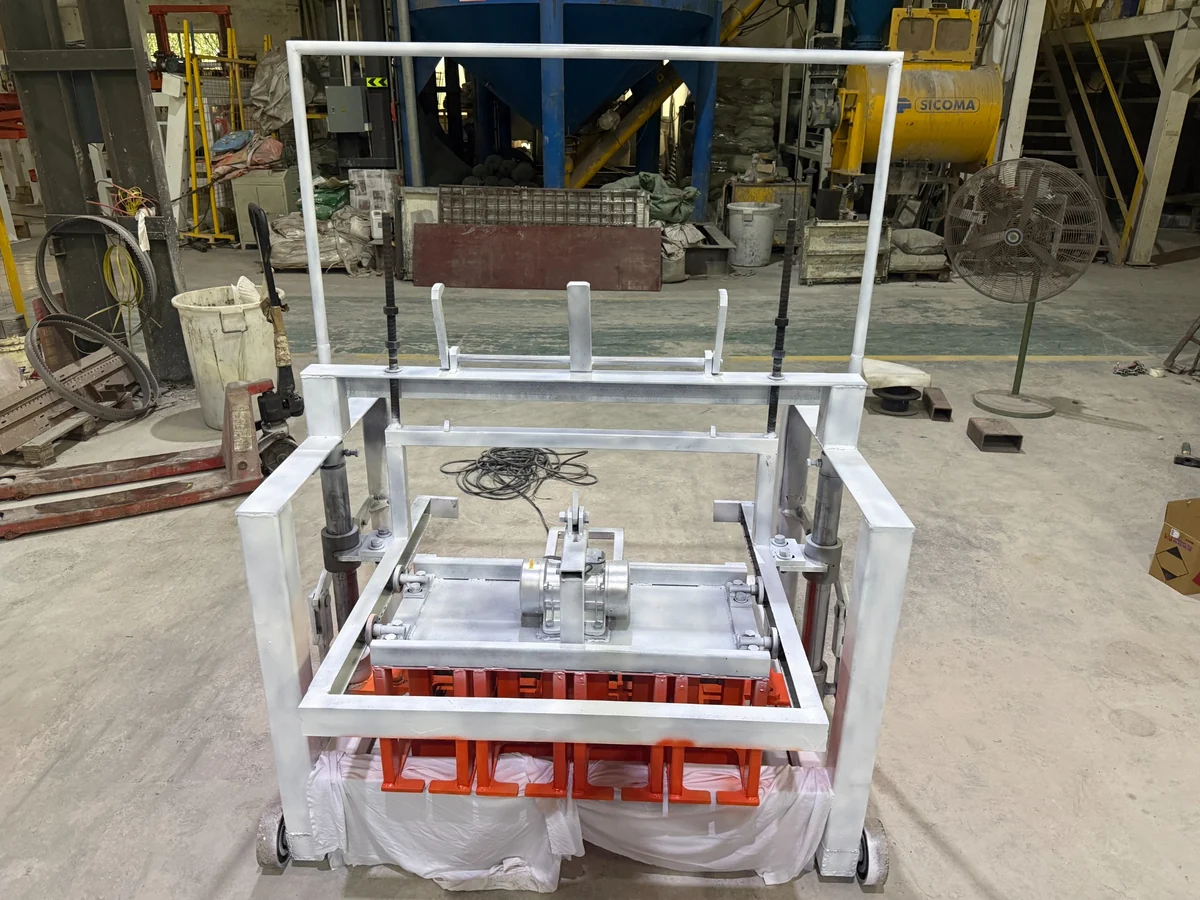
A spare-part price is useful only if it refers to the correct component. Similar-looking motors, seals, wheels or pressing parts are not necessarily interchangeable. Begin a spare-parts inquiry with identification and the manufacturer’s information rather than asking a supplier to match an unlabeled photograph.
Identify the machine and its configuration
Provide the manufacturer, model, serial or identification number and available parts documentation. State whether the machine has been modified or fitted with a replacement component before. That history may matter when the installed part differs from the original build.
Keep the machine’s year or purchase date as supporting information, not as a substitute for its identifier. Ask the supplier to confirm which parts list or revision applies to the actual configuration.
Show the component in context
Take a safe wide photograph showing where the part belongs, followed by clear detail photographs and readable external labels. Use the manual’s part reference when available. Do not remove guards or expose live electrical equipment simply to get a better image.
Where measurements are needed, ask for a measurement checklist and have competent personnel follow the approved isolation procedure. Do not guess dimensions from pixels or open a pressurized component without the required technical procedure.
Describe why a replacement is requested
Explain whether the part is for planned stock, an approved repair or investigation of a fault. Provide the observed symptom and any technician’s diagnosis separately. Replacing the most visible component is not a substitute for identifying the cause of repeated failures.
Record the part already installed and any approved alternative proposed by the supplier. Obtain written confirmation of interchangeability, matching components and installation requirements before treating an alternative as equivalent.
Define the order and installation scope
Ask whether the quotation covers a single part, a matched set or an assembly. Clarify quantities, included fasteners or seals where relevant, packaging and the documentation supplied. Keep price, lead time and validity attached to that exact scope.
Have the manufacturer specify installation and verification requirements. Safety-related, electrical, hydraulic or structural components need appropriate technical review; this article does not authorize substitutions or repair procedures.
Build a reusable spare-parts register
| Field | Information to keep |
|---|---|
| Machine | Identifier and configuration |
| Component | Part reference and installed location |
| Evidence | Label, safe photographs and requested measurements |
| Replacement | Confirmed part or approved alternative |
| Order | Quantity, package scope and quotation reference |
| Installation | Authorized procedure and verification record |
A maintained register makes repeat purchasing easier without promising that a generic spare fits every machine. It also lets production and purchasing discuss the same item when deciding what should be held as planned stock.
Discuss your requirements
Review our hollow block equipment range and contact Hendely Block Machine with your block drawing, machine details and project location. Ask for written confirmation of the configuration that applies to your project.
WhatsApp: +86 13434875018 · Email: megabusinessolution@gmail.com
Editorial archive: week of 21 September 2026. Prepared and reviewed on 14 October 2026. This is a practical planning guide, not a record of a customer visit or a historical machine test.