
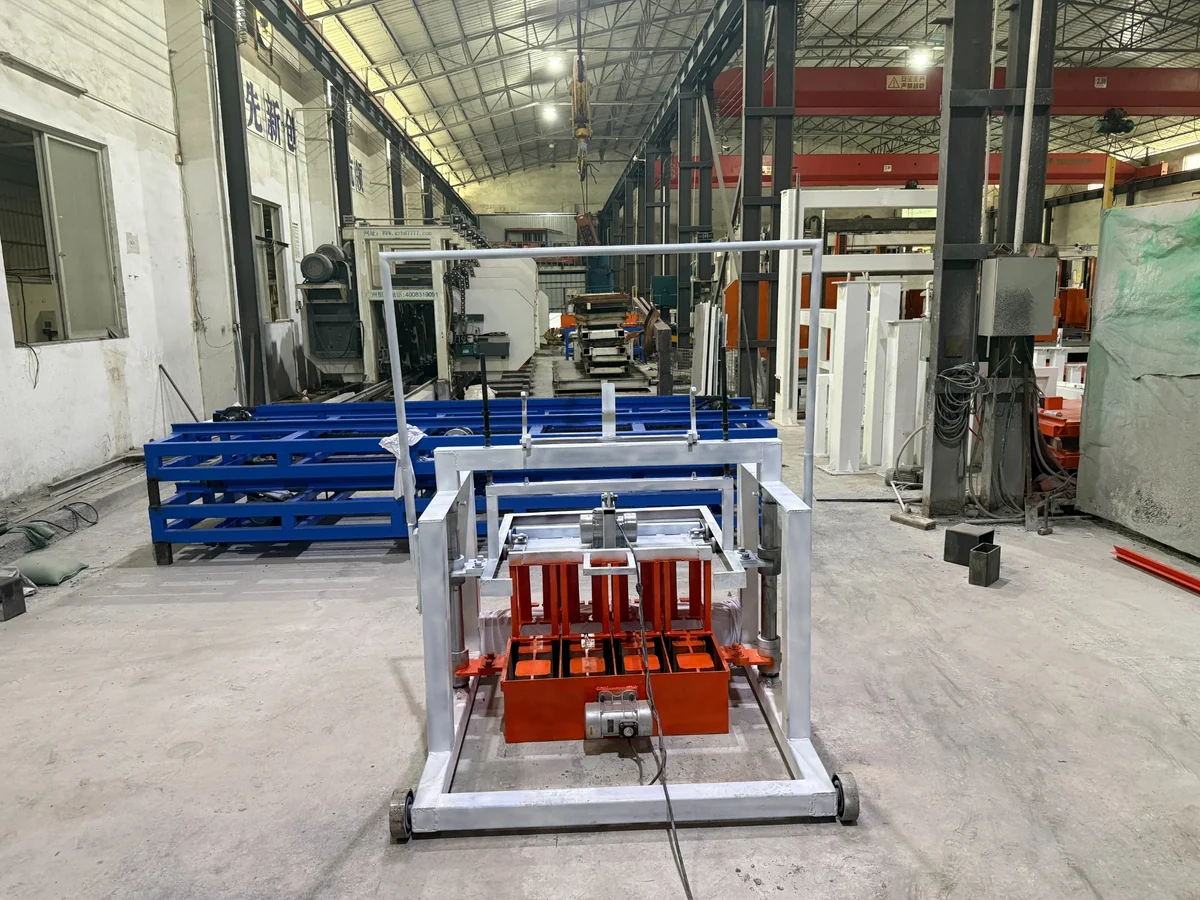
“Manual” and “semi-automatic” are useful starting descriptions, but they do not tell you exactly how a production day will run. Before comparing quotations, break the workflow into individual tasks. Then ask each supplier who or what performs those tasks on the quoted machine.
Make a task map before comparing models
List material measuring, mixing, transfer to the machine, mold filling, forming, stripping, product movement and cleanup. Use a separate column for tasks requiring another machine or a handling tool. A comparison becomes clearer when the whole workflow is visible.
Ask for a video showing normal operation with the proposed staffing arrangement. An operator may step outside a close-up shot to load material or move blocks, so request a wide view as well. Do not translate a short equipment demonstration into a guaranteed labor saving.
Define what the controls actually do
Ask whether a button starts one movement, a timed sequence or a repeatable operating cycle. Clarify what still requires a manual command and what happens when the sequence is interrupted. These are questions for the supplied controls and manual, not assumptions based on cabinet appearance.
Request the operating instructions and the scope of operator training. Safety controls and guards must remain part of the approved machine configuration. Never choose a machine on the basis of a demonstration that bypasses safeguards to appear faster.
Include material preparation and product handling
A powered forming operation does not answer how mixed material arrives or how products are handled afterward. Compare the availability of mixing and handling resources against the forming stage. Otherwise, an attractive cycle-time figure may describe only a small part of the day.
For each quotation, mark accessories as included, optional or provided by the buyer. This helps distinguish an automation upgrade from a larger equipment package. Compare like-for-like scopes before deciding which purchase price is lower.
Match the plan to your staff and block range
Ask how the workflow changes when you switch block drawings or molds. Include setup, sample checks and cleanup in the discussion. For a small business producing several block types, flexibility and clear changeover procedures may be important alongside the headline output figure.
Prepare realistic questions about operator training, supervision and maintenance support. Avoid assuming that an automatic movement removes the need for trained people. The manufacturer’s instructions and the site risk assessment should determine how work is assigned.
Request a written task comparison
| Workflow stage | Question for both quotations |
|---|---|
| Mixing and supply | Which equipment and people are required? |
| Filling and forming | Which actions are powered or sequenced? |
| Stripping and handling | Who moves the equipment or products? |
| Mold changes | What tools, training and downtime are assumed? |
| Daily output | Which block and full-shift conditions support the estimate? |
Use the completed table to discuss the next step with the supplier. The aim is not to declare one automation level universally better, but to choose a workflow your team can operate, support and expand responsibly.
Discuss your requirements
Review our semi-automatic machine options and contact Hendely Block Machine with your block drawing, machine details and project location. Ask for written confirmation of the configuration that applies to your project.
WhatsApp: +86 13434875018 · Email: megabusinessolution@gmail.com
Technical reading
UK HSE: Providing and using work equipment safely. These references provide background; the approved machine manual and applicable project requirements remain controlling.
Editorial archive: week of 16 March 2026. Prepared and reviewed on 14 October 2026. This is a practical planning guide, not a record of a customer visit or a historical machine test.