
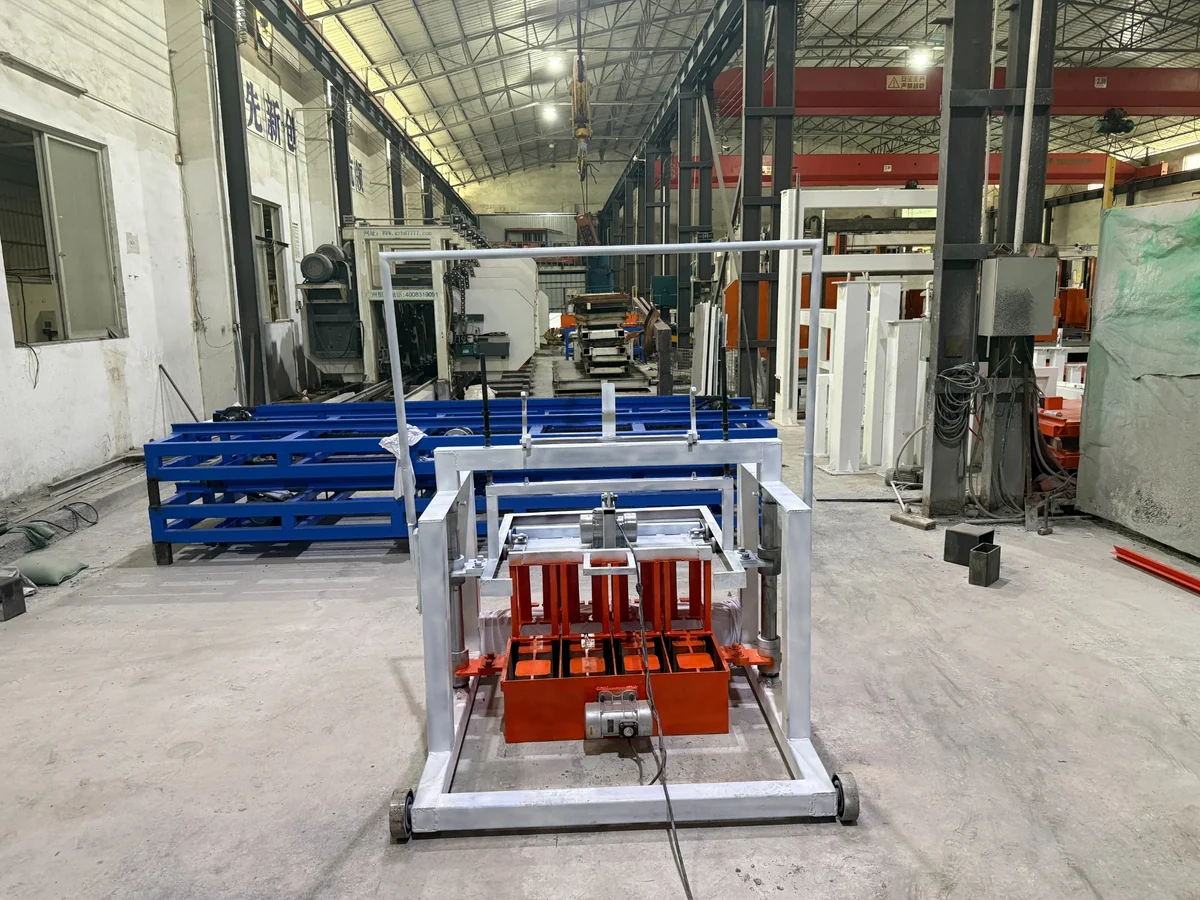
An output claim is useful only when its assumptions are visible. “Blocks per day” can mean a theoretical calculation, an observed test or a planning estimate. Ask which one the supplier is providing and require the exact block drawing, machine configuration and time boundary.
Begin with the actual mold quantity
Record how many units are formed per cycle for your selected block drawing. Do not compare two output figures when one uses a smaller block or a different mold arrangement. A catalogue model name is not a substitute for this specification.
Ask the supplier to state whether every cavity is being used and whether the sample demonstration matches the proposed order. Keep the video or trial record linked to the quotation so the basis can be reviewed later.
Define cycle time clearly
Find out whether cycle time includes filling, forming, stripping, removal or repositioning and readiness for the next cycle. A timer covering only vibration cannot describe the full repetitive workflow. Use the same start and finish points when comparing observations.
A purely theoretical hourly calculation is: blocks per cycle × 3,600 ÷ cycle time in seconds. This is arithmetic, not proof of sustainable output. It assumes the stated cycle can repeat without interruption for the entire hour.
Convert the calculation into an illustrative shift plan
For example only, suppose a hypothetical mold forms four units per complete 60-second cycle. Its theoretical output would be 240 units per hour. If six hours of an eight-hour shift were actually available for those cycles, gross formed output would be 1,440 units.
If 5% of that hypothetical output were rejected, accepted output would be 1,368 units. These invented inputs illustrate the calculation; they are not specifications or performance claims for a Hendely machine. Replace them with measured, supplier-confirmed values.
Explain time losses instead of hiding them
Record loading delays, material shortages, mold changes, cleaning, breaks and unplanned stops. Avoid applying a vague efficiency percentage on top of a time estimate that already deducted the same interruptions. That would count the loss twice.
Count rejected or held products separately from accepted output. Products awaiting required checks should not automatically be treated as saleable. Your production report should make its acceptance definition clear.
Request a transparent capacity statement
| Capacity item | What should accompany the number |
|---|---|
| Units per cycle | Approved block drawing and mold quantity |
| Cycle time | Defined start and finish points |
| Shift time | Scheduled hours and actual productive hours |
| Interruptions | Reason and duration of each deduction |
| Accepted output | Rejected and held quantities identified separately |
This framework makes a quotation easier to discuss without accusing a supplier of exaggeration. It also helps a buyer decide whether a constraint lies in forming speed, material supply, staffing, handling or the acceptance process.
Discuss your requirements
Review our semi-automatic machine options and contact Hendely Block Machine with your block drawing, machine details and project location. Ask for written confirmation of the configuration that applies to your project.
WhatsApp: +86 13434875018 · Email: megabusinessolution@gmail.com
Editorial archive: week of 25 May 2026. Prepared and reviewed on 14 October 2026. This is a practical planning guide, not a record of a customer visit or a historical machine test.