
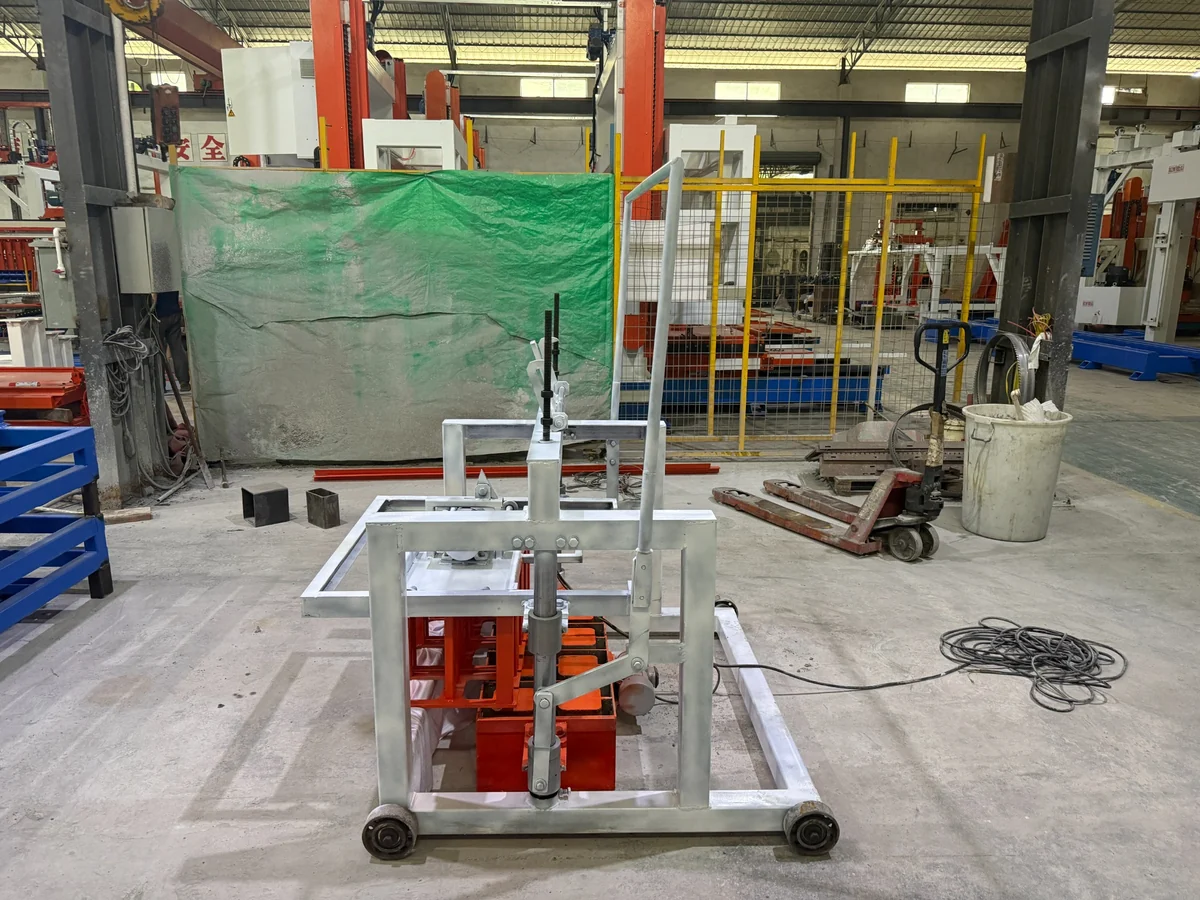
“How many workers do I need?” is a reasonable question, but it cannot be answered reliably from the forming machine alone. Start with the actual production tasks, the equipment supplied and the block range. Then review a staffing plan for the entire shift, including the work before and after forming.
List the tasks around the machine
Record receipt and measurement of materials, mixing, transfer, machine operation, product handling, inspection, cleaning and dispatch preparation. Assign a responsible role to each task and identify the tools or supporting equipment involved.
Do not combine tasks simply because they are performed by one person in a promotional video. Ask whether the proposed arrangement is intended for a demonstration or sustained operation, and whether simultaneous duties can be performed safely at your site.
Include preparation and changeovers
Startup checks, mold changes, trial samples and cleanup still occupy time even when they are not part of the headline forming cycle. Ask the manufacturer to describe the normal procedures and the training needed for them.
Map the work by time period rather than only by job title. If several tasks require attention at the same moment, a plan that looks adequate on paper may leave one stage waiting. Identify these overlaps before making labor-saving claims.
Separate production from quality decisions
Define who records batch details, identifies samples and decides whether products are held or accepted under your quality procedure. Keep those responsibilities visible even in a small team. An unrecorded visual check can be difficult to reconstruct when a customer later asks about a batch.
Agree how operators escalate unusual noise, defects or interruptions. Workers should not be expected to make unapproved mechanical or electrical adjustments to maintain an output target.
Plan coverage and training
Ask which jobs require specific training or authorization, including equipment operation, material handling and maintenance. Review breaks, absence cover and supervision. Do not assume every worker can replace every other role without preparation.
HSE’s guidance emphasizes training and suitability of work equipment. Have your actual staffing arrangement reviewed against the manufacturer’s instructions and applicable site-safety requirements; this article is a planning framework, not a prescribed minimum workforce.
Use a shift responsibility matrix
| Task | Role to assign | Information to record |
|---|---|---|
| Material preparation | Trained responsible worker | Batch and source records |
| Machine operation | Authorized operator | Model and approved procedure |
| Product handling | Assigned handling role | Route and release requirements |
| Quality checks | Responsible reviewer | Sample IDs and acceptance status |
| Cleanup and handover | Authorized personnel | Isolation procedure and open issues |
Share this matrix with the supplier when discussing output. It makes the assumptions behind a proposed worker count visible and helps identify where training, handling equipment or a revised layout may be more useful than simply adding another person.
Discuss your requirements
Review our semi-automatic machine options and contact Hendely Block Machine with your block drawing, machine details and project location. Ask for written confirmation of the configuration that applies to your project.
WhatsApp: +86 13434875018 · Email: megabusinessolution@gmail.com
Technical reading
UK HSE: Providing and using work equipment safely. These references provide background; the approved machine manual and applicable project requirements remain controlling.
Editorial archive: week of 22 June 2026. Prepared and reviewed on 14 October 2026. This is a practical planning guide, not a record of a customer visit or a historical machine test.