
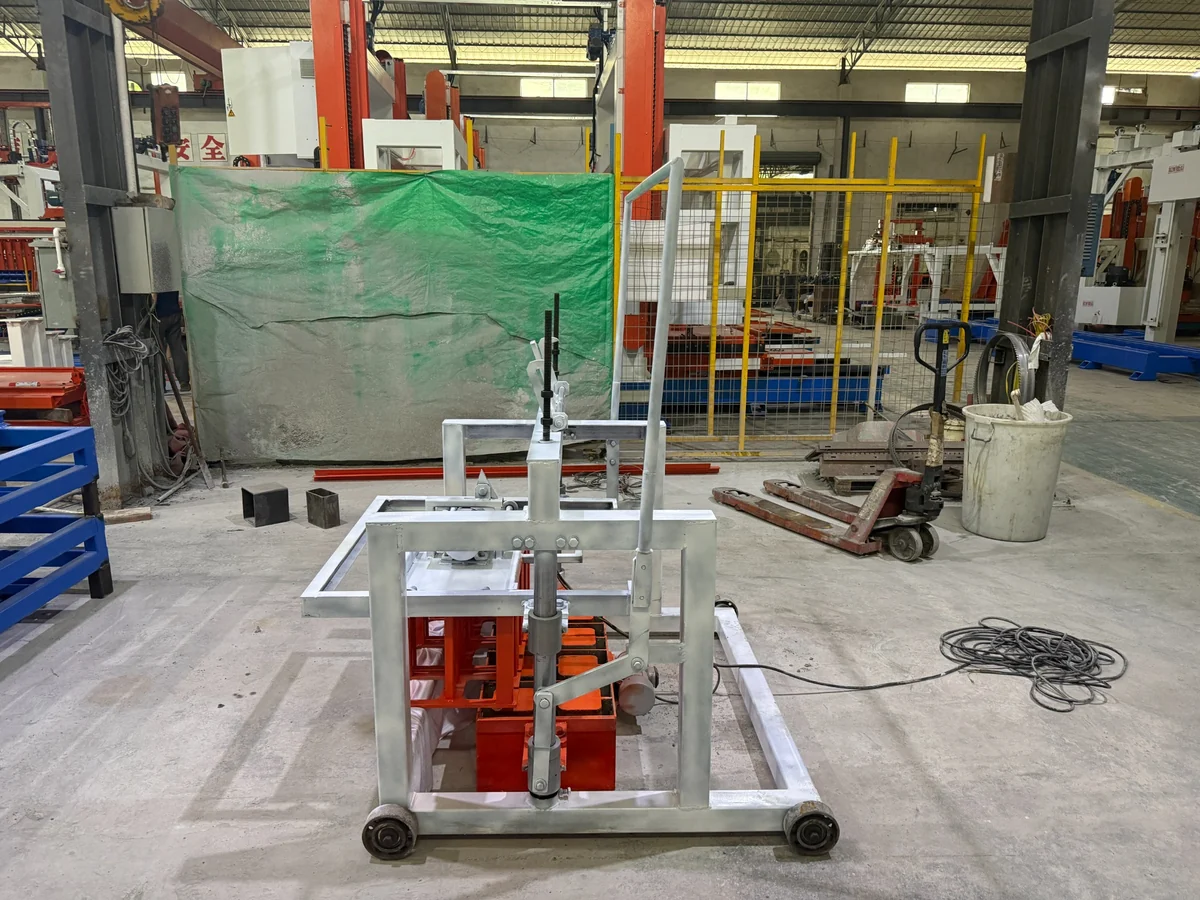
When a business wants more output, a bigger forming machine may look like the obvious answer. Before changing equipment, identify where the existing workflow actually loses time or holds products. An upgrade should address a demonstrated constraint rather than the machine with the most visible movement.
Define the output you want to improve
Separate gross formed units, accepted production and dispatched units. Record the block drawing and shift arrangement. Otherwise, a change in product mix or acceptance status can look like a machine-capacity problem when the comparison is not consistent.
Choose a representative observation period and keep its conditions visible. A particularly good demonstration cycle and a disrupted shift are both useful records, but neither should silently stand in for normal operation.
Track waiting time at each stage
Record material preparation, mixing, transfer, forming, handling, curing-space availability and dispatch. Note when a stage waits for input and when it cannot release its output. Keep explanations factual until the responsible team has reviewed the cause.
For example, a forming machine that repeatedly waits for material needs a different investigation from a machine that forms blocks but has nowhere appropriate to put them. The point is to identify the constraint through observation, not to assume one from a sales specification.
Compare improvements under the same assumptions
Ask what would change if material supply, handling or scheduling were improved without replacing the main machine. Then compare that scenario with a proposed equipment upgrade using the same block, staffing and acceptance basis.
Label every projection as an estimate. Do not promise that buying a faster machine will automatically increase sales, reduce unit cost or shorten payback. Local demand, approved product quality and the rest of the workflow need their own evidence.
Review interface and site consequences
A larger or different machine can require a revised equipment package and site plan. Ask the supplier to identify changes in molds, mixing, utilities, handling, working clearances and operator training. Request confirmation rather than copying specifications from another installation.
Include the transition period: where existing stock will remain, how commissioning is handled and how trial products are identified. A useful expansion plan should explain how the new arrangement is introduced, not just show an attractive final layout.
Build an upgrade decision record
| Evidence | Question it helps answer |
|---|---|
| Stage timing | Where does work actually wait? |
| Batch and rejection records | Is accepted output limited by quality? |
| Space and handling review | Can downstream stages accept more product? |
| Proposed configuration | What else changes with the machine? |
| Trial and acceptance plan | How will improvement be verified? |
Use the record to ask for a specific proposal. The best next purchase may be different from the first one imagined, and some improvements may be organizational rather than mechanical. A transparent baseline helps you evaluate the result after any change.
Discuss your requirements
Review our semi-automatic machine options and contact Hendely Block Machine with your block drawing, machine details and project location. Ask for written confirmation of the configuration that applies to your project.
WhatsApp: +86 13434875018 · Email: megabusinessolution@gmail.com
Editorial archive: week of 05 October 2026. Prepared and reviewed on 14 October 2026. This is a practical planning guide, not a record of a customer visit or a historical machine test.