
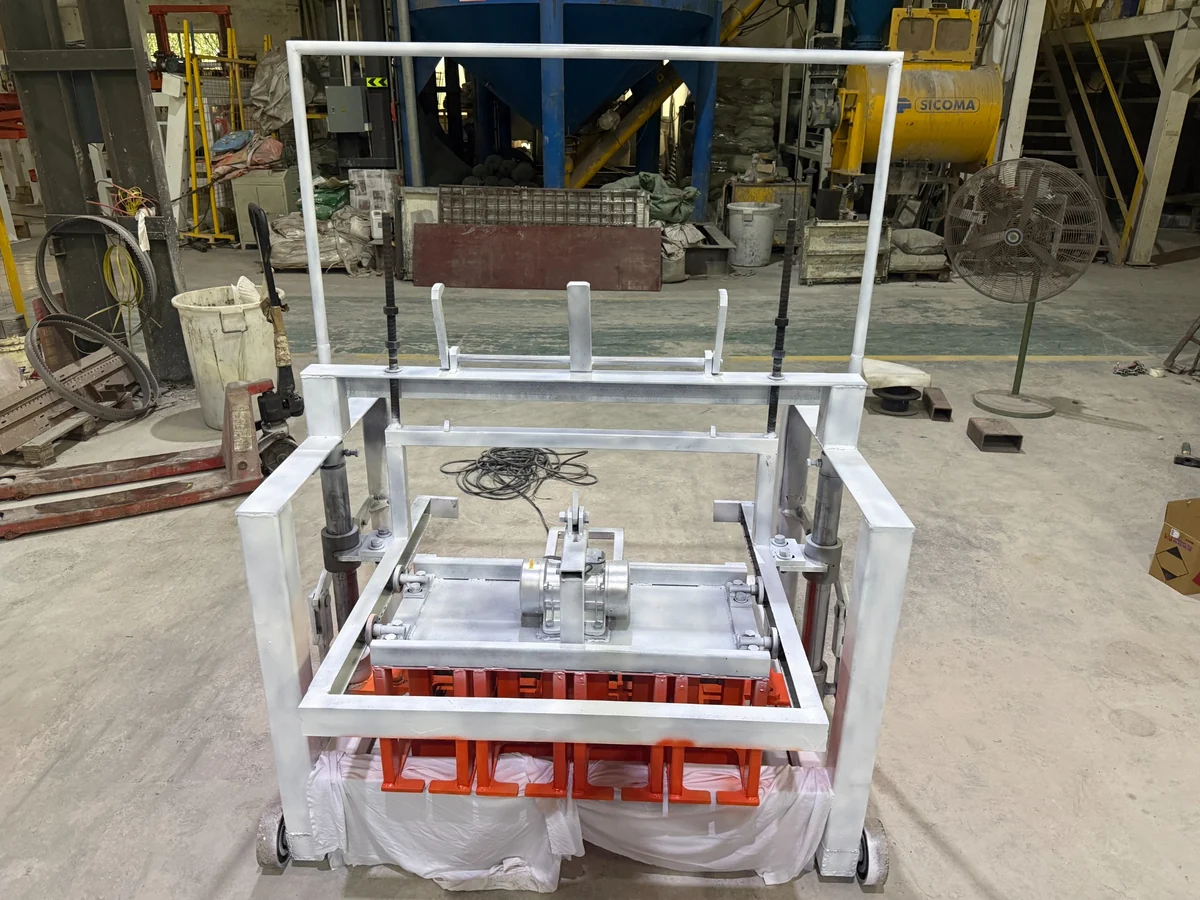
A product list showing hollow blocks, solid blocks and pavers does not prove that every configuration of a machine can produce every item. Start with the exact products you plan to sell, then ask the supplier to confirm the equipment and tooling needed for each one. Treat compatibility as a documented engineering question rather than a marketing label.
Create one drawing for each product
Give every proposed product its own drawing, dimensions and identifying name. For hollow blocks, show the openings and walls. For solid products or pavers, show the full shape, thickness and any special edges or surface requirements. Do not rely on a collage of sample photographs alone.
Separate the product you need at startup from products you may add later. This prevents an early quotation from silently including assumptions about a future machine configuration or accessories that you have not budgeted for.
Ask what changes between products
Request a list of tooling and setup changes for each drawing. Ask whether the change involves a mold assembly alone, matching pressing parts, adjustments, production supports or other equipment. Let the manufacturer specify the interface requirements for the actual model.
Do not modify the frame, controls, pressure settings or guarding just to make an unapproved mold fit. Those changes require the manufacturer’s technical review and an appropriate safety assessment, not trial-and-error adjustment during production.
Review the production method as well as the shape
Ask how the proposed mix, filling process, compaction and product handling will be demonstrated for each product. Nitterhouse’s manufacturing overview describes mixing, forming and curing as connected stages; a change of product should therefore be discussed across the workflow, not just at the mold.
The supplier should confirm the practical limitations of the proposed machine. A similar-looking finished shape from a different production process is not sufficient evidence that your selected machine can make it acceptably.
Define testing and appearance requirements
Agree what an acceptable sample means for each product. This may include geometry, appearance and the testing required by the project or destination market. A visually attractive sample is not a substitute for the required test results.
Keep photographs and test records tied to the drawing revision and the machine configuration used. Avoid requesting or advertising a universal strength, tolerance or daily output across several product types without separate supporting evidence.
Compare complete changeover packages
| Product option | Information to confirm |
|---|---|
| Startup block | Approved drawing and included tooling |
| Second block size | Matching parts and changeover requirements |
| Solid block | Confirmed machine compatibility and trial scope |
| Paver | Thickness, surface requirements and process suitability |
| Future expansion | Additional equipment, training and revised quotation |
This approach can still leave room to expand later. It simply makes the starting order precise and identifies which future products require further technical confirmation instead of promising that one mold change solves every requirement.
Discuss your requirements
Review our hollow block mold information and contact Hendely Block Machine with your block drawing, machine details and project location. Ask for written confirmation of the configuration that applies to your project.
WhatsApp: +86 13434875018 · Email: megabusinessolution@gmail.com
Technical reading
Nitterhouse Masonry: CMU manufacturing process. These references provide background; the approved machine manual and applicable project requirements remain controlling.
Editorial archive: week of 30 March 2026. Prepared and reviewed on 14 October 2026. This is a practical planning guide, not a record of a customer visit or a historical machine test.