
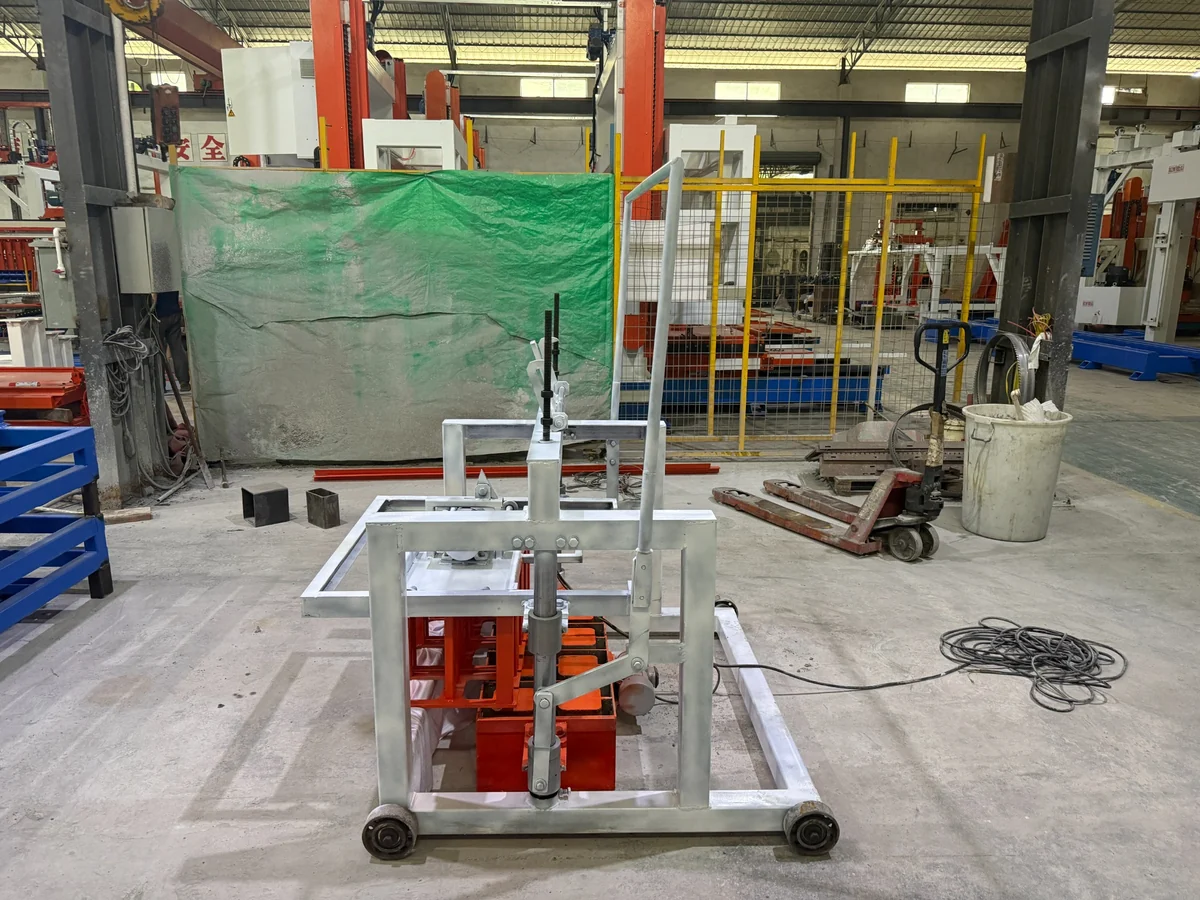
A mixer and a block machine can both have attractive capacity figures while still being poorly matched as a working system. The first question is not which machine has the larger motor. It is how much usable material reaches the forming stage, how often it arrives and what happens between batches.
Clarify what the mixer capacity describes
Ask whether the quoted number refers to the container volume, input quantity or usable discharge per batch for the proposed material. These are not interchangeable descriptions. Confirm the units and the conditions used for the supplier’s output estimate.
Request a practical batch sheet for review rather than converting a nominal mixer volume directly into saleable blocks. The actual mix and the approved block geometry are needed before the relationship can be assessed.
Measure the complete batch sequence
Include loading, mixing, discharge, transfer and the preparation for the next batch when discussing supply frequency. Time spent waiting for ingredients belongs in the workflow even though it may not appear in a mixer demonstration.
Ask whether a proposed operating plan allows overlapping tasks safely. Do not simply add up brochure outputs from separate machines and assume they operate simultaneously under your staffing arrangement. Have the supplier describe the sequence that supports the estimate.
Connect batch output to the chosen block
Record the amount of material consumed for an identified trial batch and the corresponding accepted blocks. Keep rejected units and unused material separate so the calculation is traceable. The objective is a consistent basis for planning, not an unsupported recipe.
A useful calculation is: usable batch material divided by measured material consumption per formed block gives an indicative number of blocks supplied by that batch. State that this is a planning calculation with measured inputs, not a guaranteed machine output.
Review the transfer stage
Describe how material travels from mixer to mold: equipment used, distance, elevation changes and operator tasks. Ask who supplies the transfer equipment and whether it is included in the quotation. A matching mixer and press are not a complete system if the connection between them is undefined.
Check where waiting material is held and how its condition is controlled under the manufacturer’s approved process. Do not solve an interruption by making unapproved water additions or changing a recipe at the machine.
Build one timing sheet
| Item to record | Why it belongs in the comparison |
|---|---|
| Usable discharge per batch | Defines the material actually available |
| Complete batch duration | Includes the work between mixing periods |
| Transfer method and time | Shows the link to the forming stage |
| Material per identified block | Relates batch output to the product |
| Staffing and interruptions | Describes the real operating arrangement |
Bring this sheet to the equipment discussion. It helps reveal whether the next improvement should be the mixer, material supply, transfer arrangement or forming stage, instead of buying capacity where the process does not need it.
Discuss your requirements
Review our semi-automatic machine options and contact Hendely Block Machine with your block drawing, machine details and project location. Ask for written confirmation of the configuration that applies to your project.
WhatsApp: +86 13434875018 · Email: megabusinessolution@gmail.com
Editorial archive: week of 13 April 2026. Prepared and reviewed on 14 October 2026. This is a practical planning guide, not a record of a customer visit or a historical machine test.