
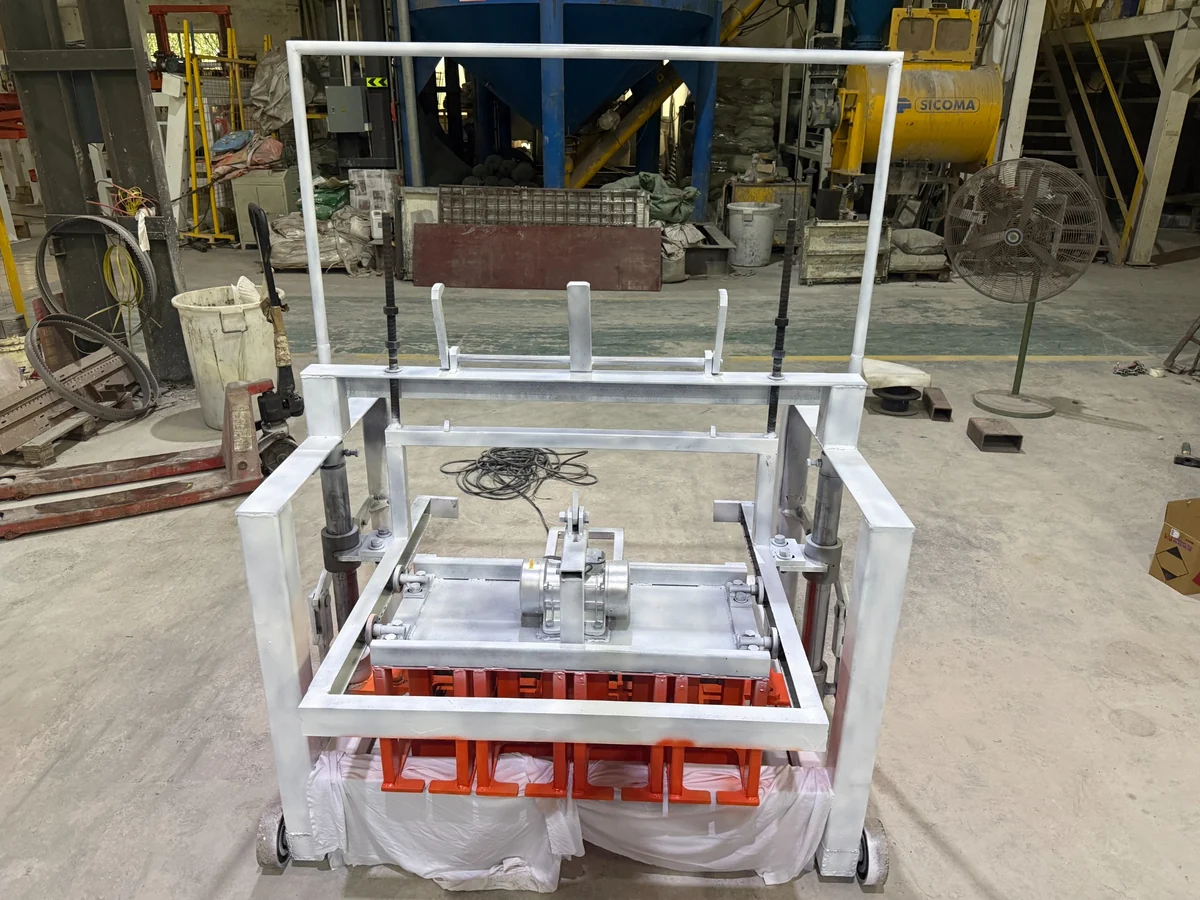
A replacement mold inquiry requires two different descriptions: the block you want to produce and the machine that must accept the tooling. Matching the outside dimensions of a block does not prove that a replacement mold will fit the machine. Start with identification and an agreed measurement request.
Identify the machine precisely
Send the manufacturer’s name, model, serial or identification details and available technical documents. Add clear views of the complete equipment and the mold area taken from safe positions. State whether the machine has been modified or has previously used replacement tooling.
Do not infer compatibility from a similar frame color or catalogue model label. A supplier should confirm which dimensions and documents it needs before producing a replacement for equipment it has not inspected.
Obtain an interface checklist
Ask the tooling supplier to specify the mounting dimensions, mating pressing components, available working envelope and other interface information it requires. Measurements must be taken under the manufacturer’s safe isolation and inspection procedures by competent personnel.
Use a labeled sketch and units for every requested measurement. Record anything that cannot be measured safely or confidently. An uncertain dimension should become a technical question, not a number guessed to complete the form.
Describe the product and the existing problem
Provide the finished-block drawing, opening layout and applicable acceptance requirements. Explain why replacement is being considered: a new block shape, planned spare tooling, damage, wear or another documented issue. Keep observations separate from conclusions about the cause.
For a recurring defect, supply sample IDs, mold positions and production records. A new mold should not be assumed to solve a problem that has not been diagnosed. Ask what checks are needed before attributing the issue to tooling.
Review matched parts and changeover scope
Request an itemized description of the replacement assembly and any matched components. Ask whether changes or adjustments are required and who approves and performs them. Do not authorize undocumented welding, grinding or changes to machine controls to make an unverified assembly fit.
Keep the final interface confirmation with the quotation. If the machine has variants, identify which one is covered. The manufacturer’s written approval and installation procedure should control the work.
Keep a replacement-tooling file
| Record | Purpose |
|---|---|
| Machine identification | Establishes the intended equipment |
| Interface measurements | Documents the required fit |
| Block drawing | Defines the finished product |
| Existing tooling photographs | Shows the configuration and observed issue |
| Written compatibility response | Records the supplier’s confirmed scope |
A careful replacement inquiry takes more preparation than sending one block photograph. That preparation makes the quotation more specific and reduces the risk of purchasing tooling that appears suitable but has never been confirmed for the actual machine.
Discuss your requirements
Review our hollow block mold information and contact Hendely Block Machine with your block drawing, machine details and project location. Ask for written confirmation of the configuration that applies to your project.
WhatsApp: +86 13434875018 · Email: megabusinessolution@gmail.com
Editorial archive: week of 10 August 2026. Prepared and reviewed on 14 October 2026. This is a practical planning guide, not a record of a customer visit or a historical machine test.